
This is the first in what I plan to be a series of posts focusing on aspects of John Williams’ scores for the Star Wars movies. What I hope will be unique about my analyses is that they will examine not only essential elements of the themes and the relationships between themes, but also how variations of the themes are used, throughout episodes I through VI.
The focus of this post is the Imperial March / Darth Vader’s theme, which first appeared and was used extensively in The Empire Strikes Back, then subsequently in Return of the Jedi, and is one that fans are intimately familiar with and can probably identify anytime they hear it. For that reason, this is not a laundry list of where/when the theme appears, but an exploration of how Williams uses and varies the theme throughout the movies, sometimes in ways that may not be apparent.
The musical examples below are presented in C for easy comparison. There are three sections to this analysis:
- The essential elements of the theme,
- Uses of the theme's fundamental harmony, and
- Melodic variations of the theme.
Essence of the Imperial/Vader Theme
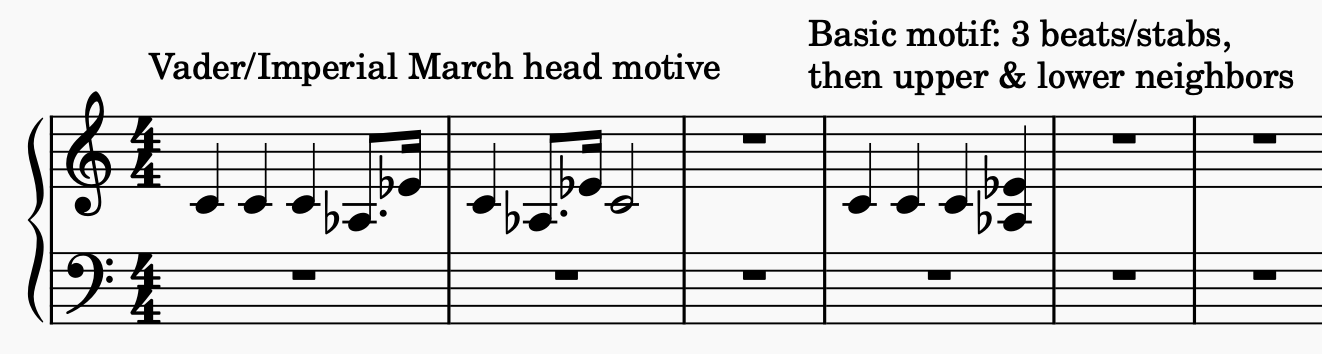
Below is a transcription of the main melody of the Imperial March in 4/4, the typical meter for marches. The head motive of the Imperial March, typically the first bar or two of a theme which is used motivically throughout a film score, is essentially three beats/stabs on the tonic followed by a figure with lower, then upper “neighbors” of Ab and Eb:
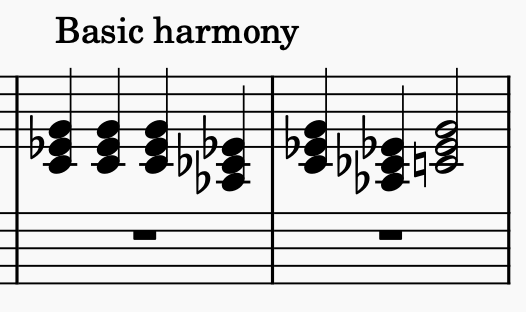
Now, let’s look at the fundamental harmonies of that theme: minor triads on C then Ab:
This oscillation between the tonic and the submediant (C and Ab in these examples) fundamentally expresses the classical Phrygian cadence which, in the key of C, would be Ab > G > C, and typically represents mourning or death in the Western classical tradition:
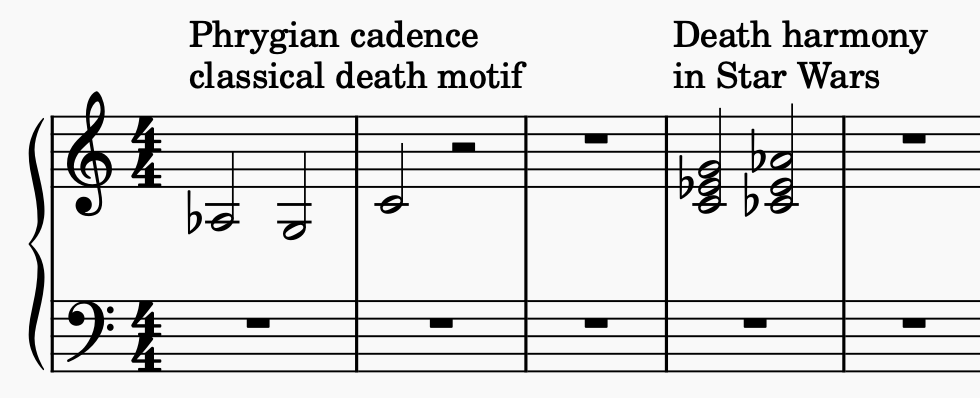
The essential characteristic making this “Phrygian” is the Ab > G motion, which mimics the half step between scale degrees 1 and 2 in the Phrygian mode.
The association of the “deathly” Imperial March with Darth Vader is essential because of Anakin Skywalker's symbolic death and entombment in Vader’s suit. This Phrygian submediant motif (C > Ab) is persistent throughout the six movies, and especially meaningful in the prequels. The harmonic relationship is sometimes heard as ascending motion to a chromatic mediant (Ab > C) so I will refer to this as a chromatic sub/mediant.
Another essential aspect of this motif is the chromaticism, stemming from making the Ab triad minor, rather than major as it would be naturally in the key. This introduces an inflection between C and Cb, which helps produce the emotional pang of the harmony. The Cb > C motion can be heard and understood as leading tone motion, though I think it probably should be spelled as Cb to convey the intended chromaticism.
Harmonic Uses of the Imperial/Vader Theme
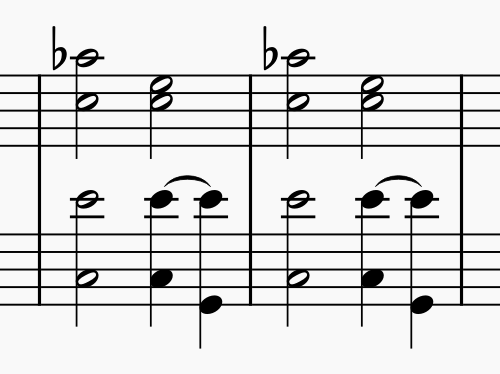
An example of a subtle use of this fundamental harmonic relationship is from The Phantom Menace, in the cue The Arrival at Tatooine, setting up the scene where the Jedi will first encounter young Anakin Skywalker. The music expresses the ambivalence of Anakin’s destiny by contrasting the Phrygian/death figure against a major third; we cannot help but feel the tension in that diminished 4th between E natural and Ab.
Williams does something very similar in Attack of the Clones when Anakin and Padme are preparing to leave Coruscant for Naboo, again contrasting a major third and the minor Phrygian quality, while also adding the flatted tonic/leading tone:
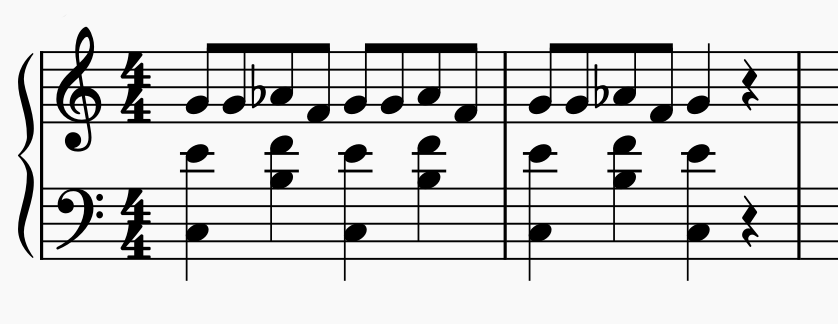
The epic Duel of the Fates expresses this essential harmony in at least two different ways. First, in the dramatic choral opening of the track, the final two chords express that Phrygian/death theme harmony:
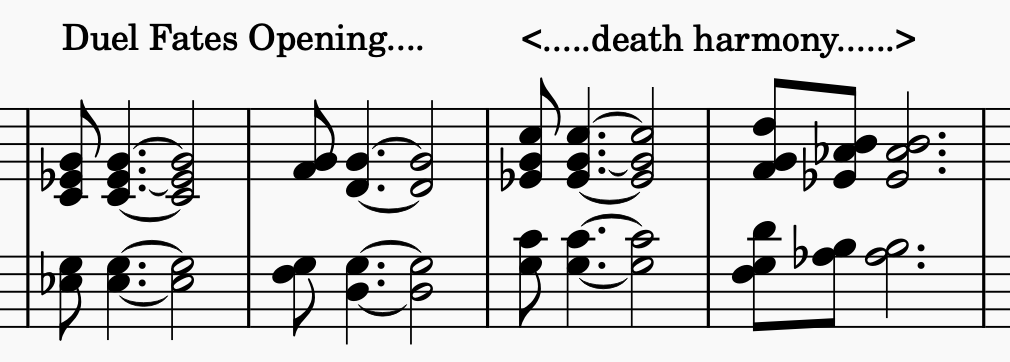
Second, about midway through the track the voices chanting in Sanskrit voice the following chords, which also express the chromatic sub/mediant relationship:
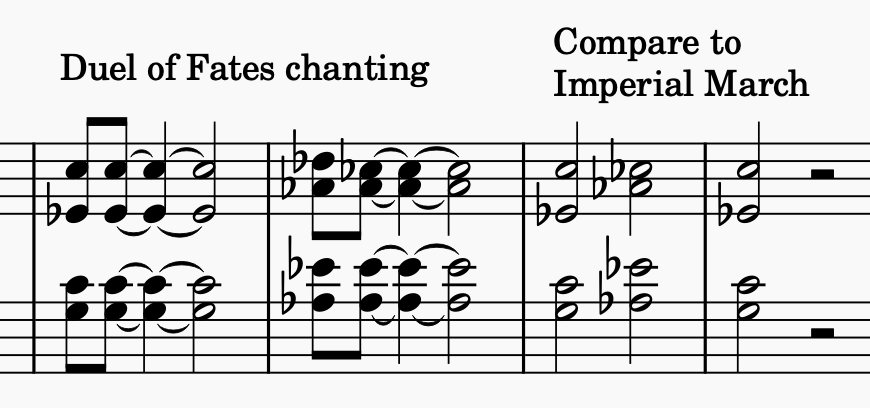
Earlier in that movie, there is a strikingly dark brass fanfare setting up the scene between Darth Sidious and Darth Maul on Coruscant; the final two chords of that passage express the death harmony (this transcription is pretty loose):
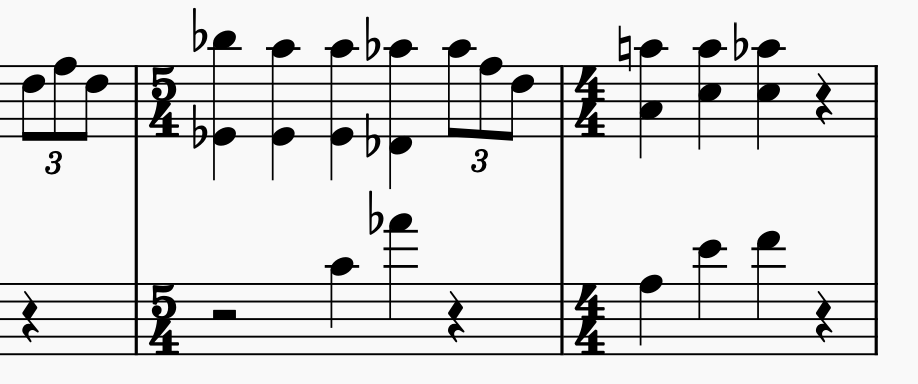
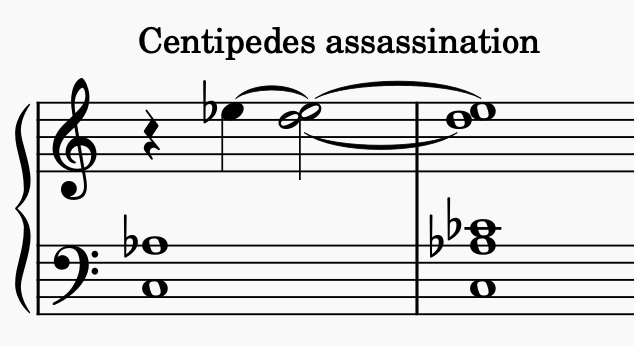
In Attack of the Clones, Williams invokes essential elements of the theme when we see the two deadly centipedes crawling across Padme’s bed. The centipedes have been delivered by an assassin working for the Separatists, who themselves work for Darth Sidious, so invoking the imperial theme makes sense. We hear the Phrygian subdominant over a C tonic, then trumpets sound a sustained minor third and second, and then a lower voice adds the Cb:
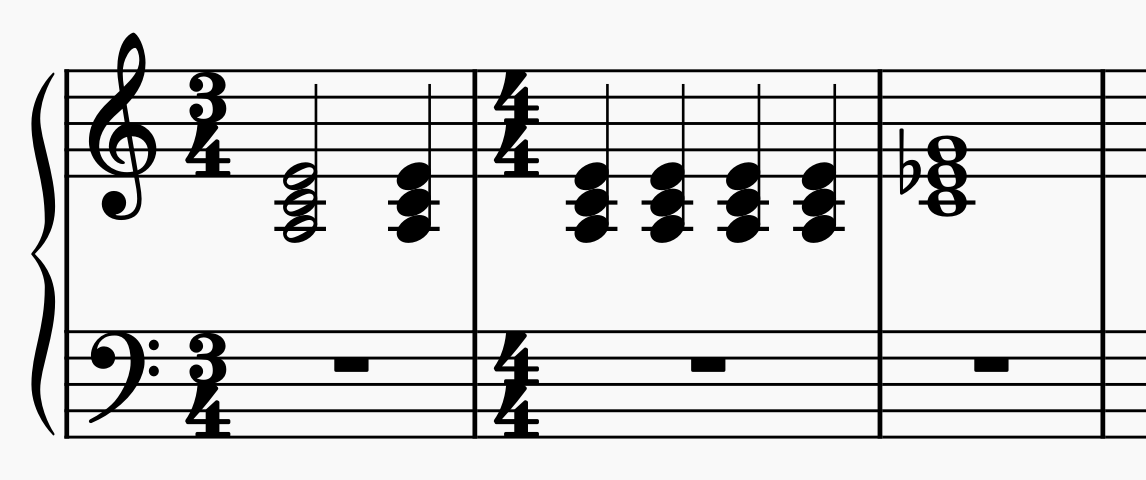
Later in the movie, there is an interesting variation of the theme, when Anakin returns to the Lars homestead with the body of his mother. As he rides up on the speeder bike, we hear repeated stabs of a minor chord, then move up by a third. It is not the same harmonic motion as the death theme, but still fundamentally expresses a chromatic sub/mediant-tonic relationship. The repeated stabs of the chord also mimic the Imperial March / Vader theme:
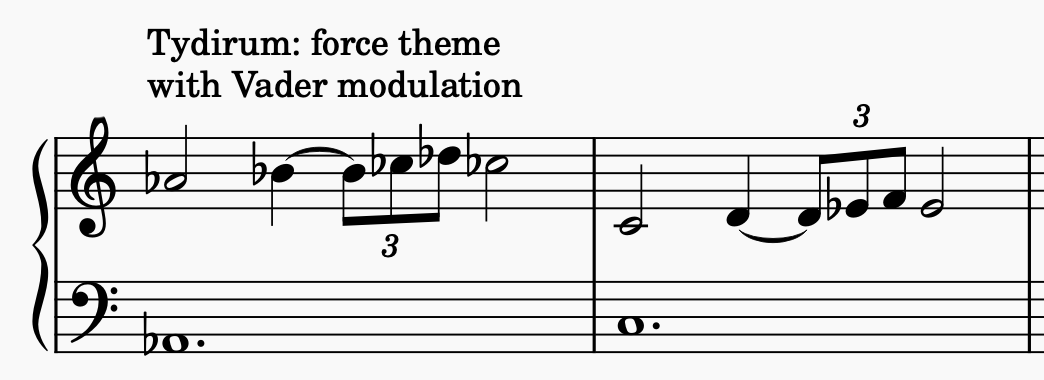
Another example is from The Return of the Jedi, in the scene when the Shuttle Tydirium is approaching Endor and Luke and Vader begin sensing each others’ presence. Williams invokes the Force/Destiny/Jedi theme, repeating it with a chromatic sub/mediant modulation to evoke Vader and the death harmony:
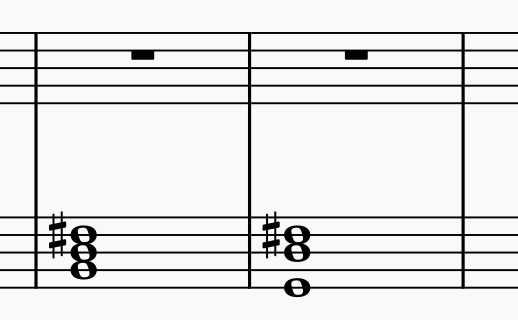
The generalized death motif is also used very explicitly for Han Solo's “death march” scene in The Empire Strikes Back, when Boba Fett is taking the entombed Solo (encased in carbonite) through the hallways of Bespin:
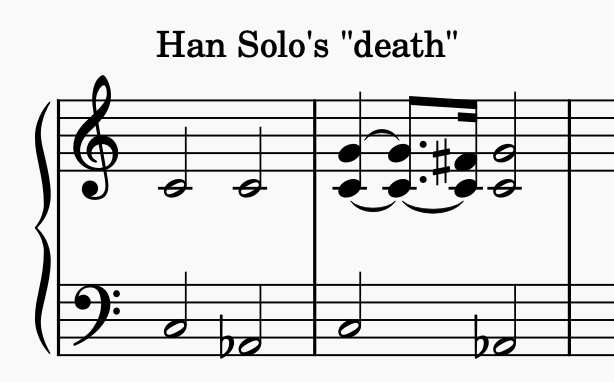
This gesture is repeated in Attack of the Clones, when Taun We leads Obi Wan to meet Jango Fett, and they encounter young Boba at the door:
Melodic Uses of the Imperial/Vader Theme
The theme’s main melody is most often presented in an unvaried, literal fashion to unambiguously evoke Darth Vader or the empire. There are times, however, when Williams uses it in a less obvious manner.
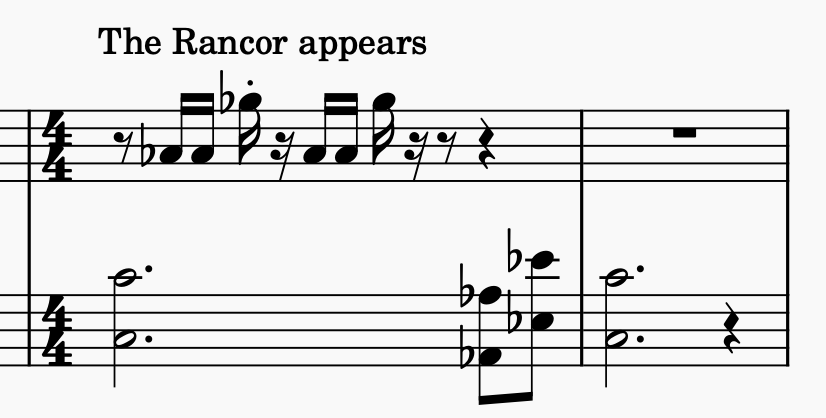
I think one of the most brilliant ways Williams invokes the Imperial/Vader theme is when Luke faces the Rancor in The Return of the Jedi. He spends much of The Empire Strikes Back hammering home the theme’s association with Vader, then reaffirms that relationship in the opening scene of The Return of the Jedi, subsequently invoking the head motive during the Rancor scene. This might seem strange, but Luke’s battle with the Rancor foreshadows his later battle with Vader, both being “dragon slaying” scenes. Luke even picks up a bone and holds it like a lightsaber. As the Rancor appears through the gate, we hear a simplified version of the Imperial/Vader theme in the low brass: a sustained note on the tonic (rather than 3 stabs), followed by the lower/upper “neighbor” figure:
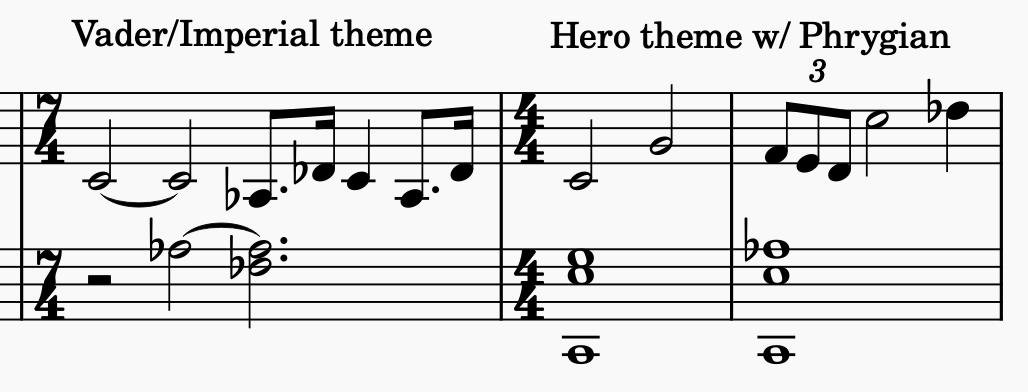
A little later in that movie, during Luke’s final visit to Dagoba, Yoda warns Luke that he must confront Vader. Under this we hear a variant of the upper/lower neighbor figure, repeated twice, with the upper neighbor as a semitone (C >Db > C). The harmony is highly suggestive of the sub/mediant, but on the final melodic note we ascend back to the tonic in a major key expression of the main heroic theme. But here Williams does something interesting: he inflects the fifth up a semitone to pull in the Phrygian quality, then also inflects the final note of the heroic theme up a semitone, creating dramatic tension as well as a reference to the original imperial theme from A New Hope:
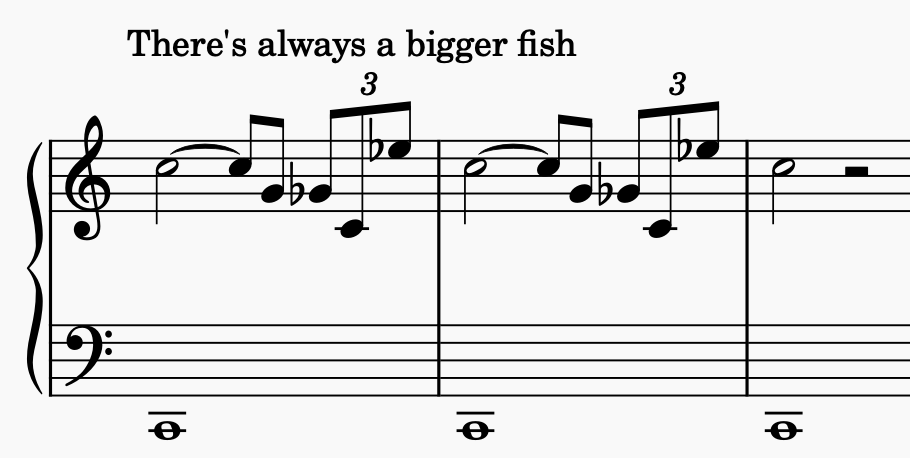
In The Phantom Menace, Williams similarly invokes the Vader/Imperial theme during the underwater “always a bigger fish scene” scene, as Qui Gon predicts the invisible forces who are plotting the rise of the empire. The melody has a sustained tone on the tonic followed by a figure that fundamentally outlines the double “neighbor”, but also throws in inflection of the 5th to a diminished 5th, which is a key harmonic component in the Emperor’s Theme:
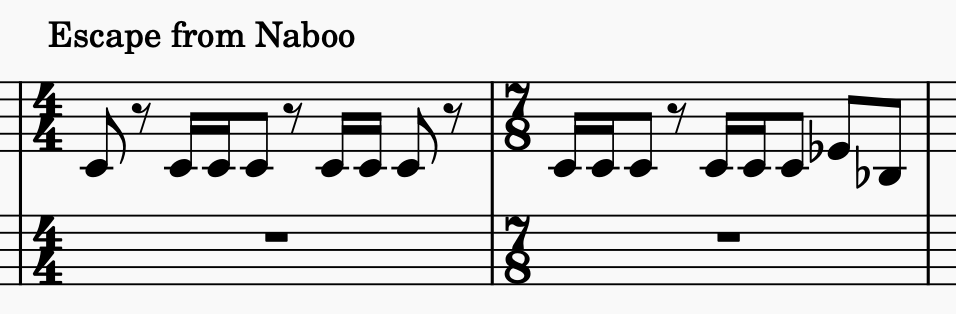
Later in The Phantom Menace, the Imperial/Vader theme is used to lend motion and urgency to the music while reminding us of what is ultimately at stake, as Darth Sidious manipulates the various conflicts to lay the foundation for the rise of the empire and the fall of Anakin Skywalker. One such example is when the heroes are fleeing Naboo through the Trade Federation blockade. Williams introduces 16th notes to add propulsion, but we fundamentally hear four “stabs” on the tonic (as opposed to the typical three), followed by an upper/lower neighbor figure:
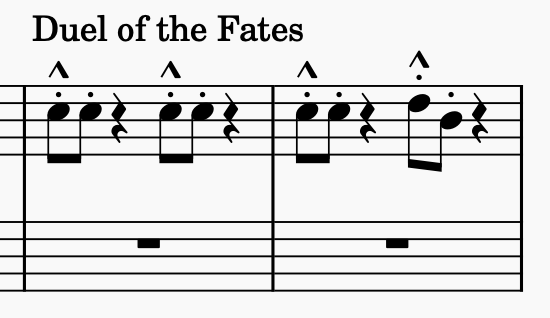
A second example is in Duel of the Fates, when strings execute what is fundamentally the three beats/stabs, followed by the double neighbor figure, inverted so that we hear the upper neighbor first. In the movie, we hear this variation under the duel between the Jedi and Darth Maul:
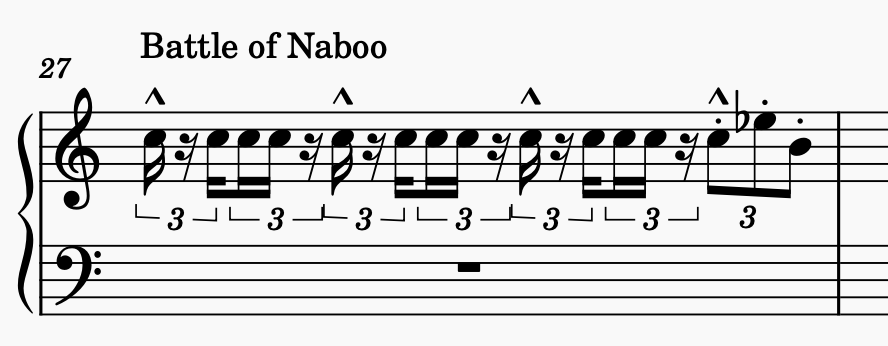
A third example is during the battle scenes in the last act of The Phantom Menace. While Williams has given this variation a galloping 16th note triplet rhythm, it is still fundamentally three beats/stabs followed by a upper/lower neighbor figure:
Attack of the Clones gives us an interestingly subtle example. After Anakin has returned to the Lars homestead with the body of his dead mother and is walking past the onlookers, we hear a variation of the ostinato from Duel of the Fates, but in the bass we hear (in 3/4 time) repeated notes on the tonic C, finally stepping down to a Cb (or B). I do interpret this as an intentional reference to the Vader/Imperial theme:
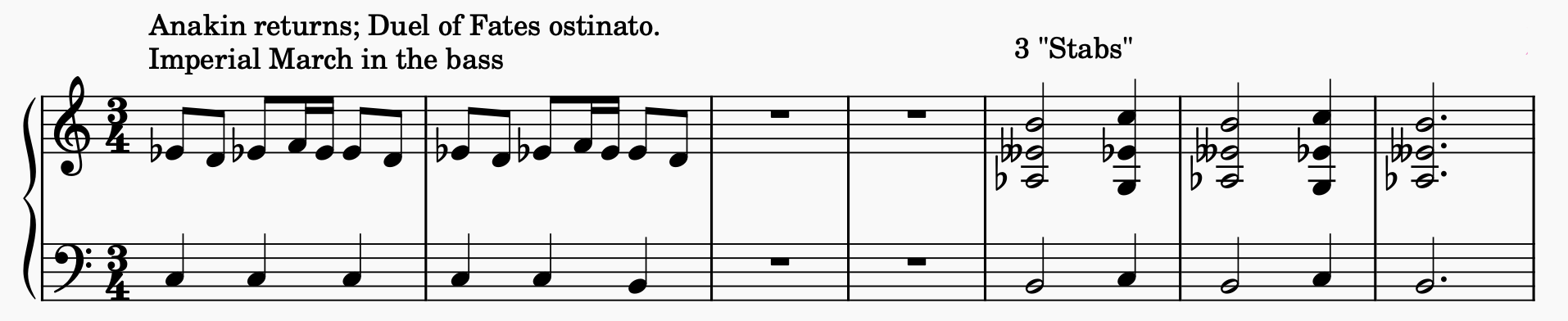
That scene culminates in three powerful chords that, while not expressing the sub/mediant harmony, do express a sort of condensation of key notes from the Imperial March, namely the Phrygian Ab > G, and our familiar friend Cb > C. This chord is sounded in three repeated stabs, each time resolving to the tonic chord (see above).
Finally, and rather importantly, the Imperial/Vader motif appears in Anakin’s Theme in The Phantom Menace, clearly as a foreshadowing of Anakin’s fate. The first appearance is more disguised, centered around the dominant and with larger leaps, but is still a clear reference to the double “neighbor” figure. However, near the end of the piece it appears literally as we're accustomed to hearing it in the Imperial March:
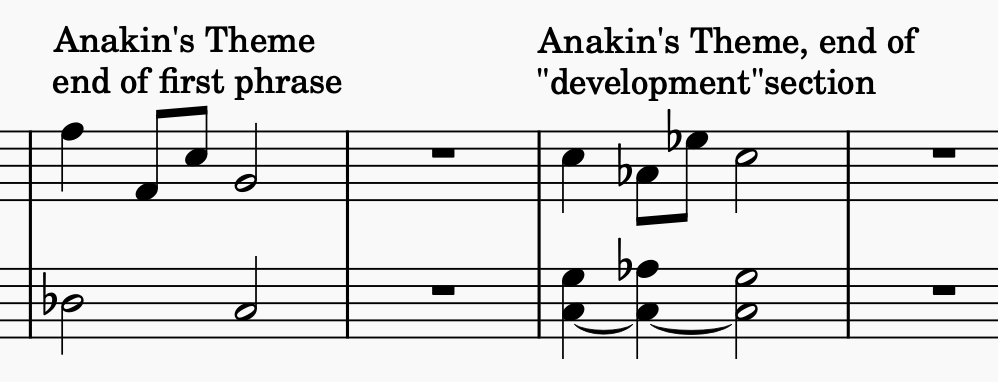
There is more to be said about Anakin's theme, but that will be for another post.
Conclusion
My main goal with this study was simply my own interest and edification. However, I hope I have managed to shine new light on how John Williams used and varied the Imperial/Vader theme throughout Episodes I through VI to help tell the Star Wars story. I also hope this might inspire composers to think how they might use similar sorts of motivic variation in their own work; it truly can add a sense of consistency, unity and musical drama to your compositions.
Written by Brian Tibbs
More Musical Analysis
Origins of The Imperial March / Darth Vader Theme traces the likely musical sources for this famous march in the score for A New Hope.
Close Encounters: How John Williams Wished Upon a Star examines the various ways the score for Close Encounters of the Third Kind is influenced by the classic song When you Wish Upon a Star.
You may also be interested in an analysis of one of my compositions, examining formal and musical unity and cohesion in a piece of music that is fairly wide-ranging in style and mood.