
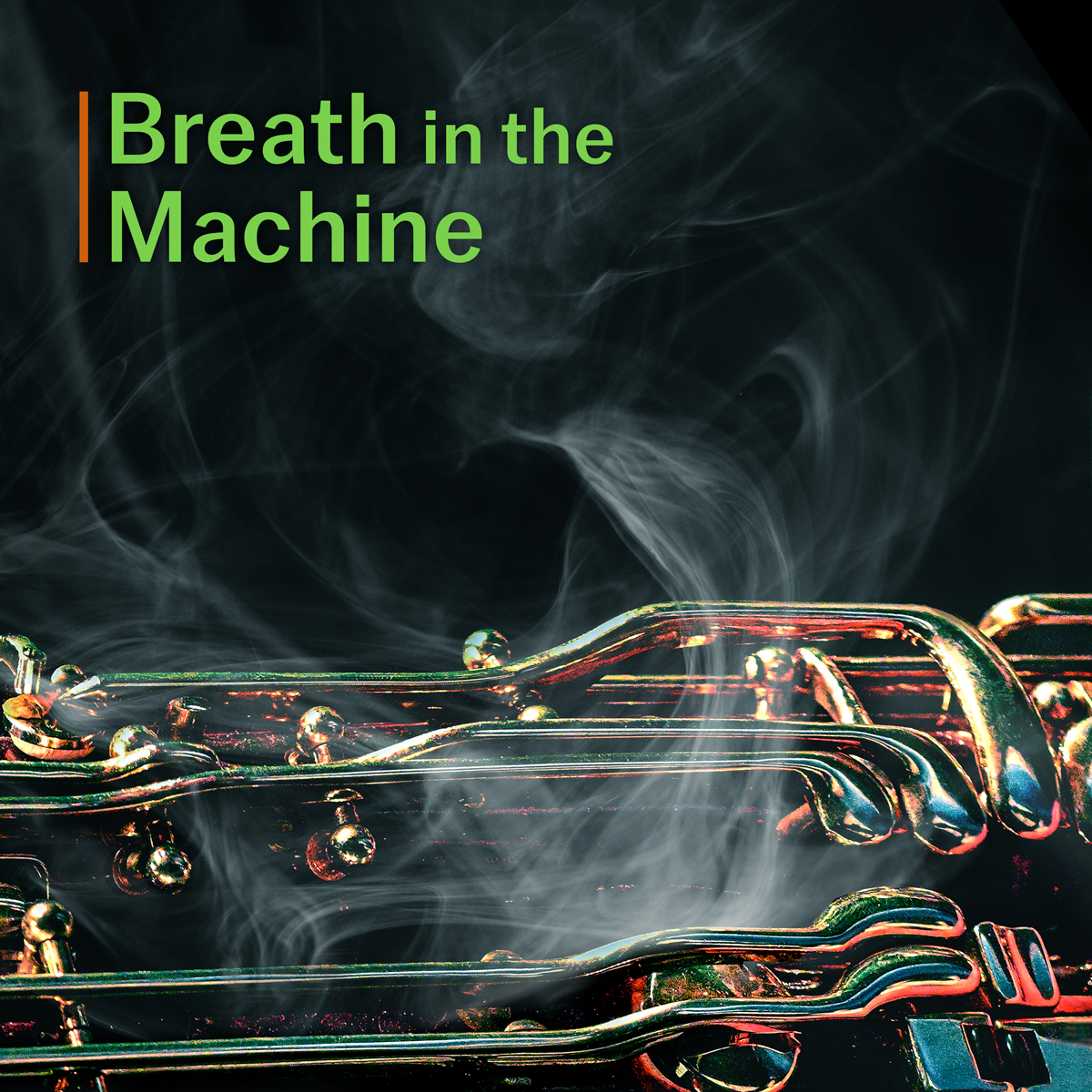
What would be the most unlikely instrument to hear in industrial music?
Another way to approach the question might be, “What is the most inherently classical musical instrument?”
A quick survey reveals that most traditional classical instruments appear in many other genres of music. Starting with the brass family, trumpet and trombone figure heavily in jazz and rock. French horn was no stranger to rock from the 70s, including <gulp> disco. The string family of instruments are featured heavily in a variety of musical genres, from folk to jazz. Flutes and clarinets are common in jazz, flutes are common in folk and rock, and oboes make an occasional appearance in those genres. Leaving the bassoon, at home nowhere but classical music. Until now. And this was the fundamental genesis of the new single Breath in the Machine.
Industrializing the Bassoon
Breath in the Machine finds a way to leverage the unique qualities of the bassoon in a thoroughly industrial musical setting.
`
It begins with non-standard performance techniques (extended technique) delivered by bassoon player Theresa Brooks. She has a background in classical performance and is currently playing with two area orchestras. She also recently performed with Tom Sharpe, drummer for the prog rock group Mannheim Steamroller. However, Theresa also brings a true post-punk sensibility informed by her love of bands such as Joy Division and Ministry.
On Breath in the Machine, she breathes a radically different energy through the mechanics of her bassoon, producing a variety of wails, ululations, blatts, squonks, pops and other effects. Her performance was recorded using the “Little Jake” bassoon pickup with a custom-built preamp housed in an Altoids tin. With the aid of further electronic manipulation, Theresa’s performance is mutated into a range of new sounds that are often unrecognizable as bassoon.
The bassoon performance nevertheless conveys something essentially human and organic, which is contrasted against an array of machine-like sounds and noises. While some of these sounds are manipulated bassoon, others were created through a combination of different synthesizers and sampling, creating a thoroughly mechanical and industrial sonic environment.
A Touch of Classical Influence
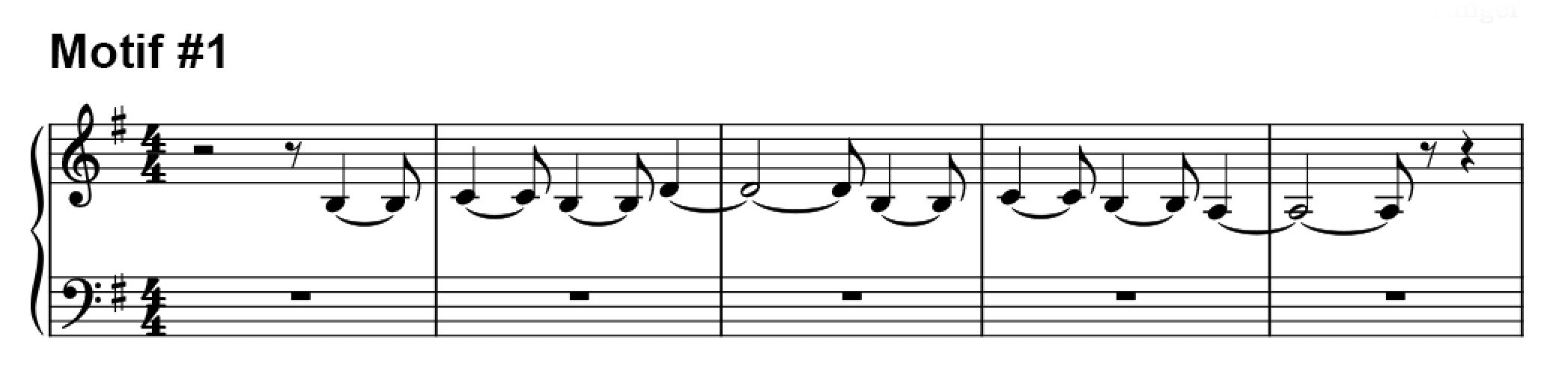
Musically speaking, Breath in the Machine is mostly in the key of E minor, then descends to B minor, but with touches of chromaticism that lean in the direction of an octatonic scale. There are two primary and contrasting musical motifs: one very constrained and composed mainly of half and whole steps, and a second rather expansive motif composed entirely of leaps.
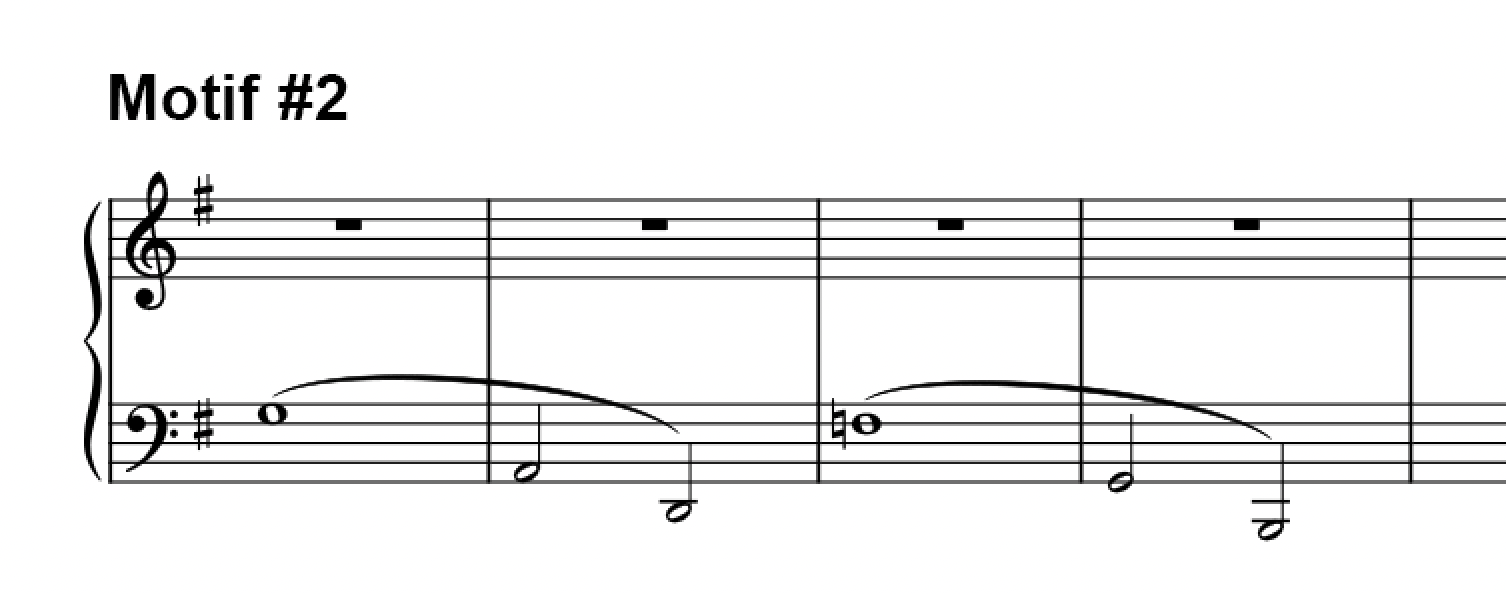
This second motif is later expressed in an inverted form, leaping upward rather than downward, and the two versions are set in extreme contrary motion against one another, producing a dramatic effect.
The strange mixture of these musical motifs with the manipulated bassoon, synthesizer and other mechanical sounds is set against a propulsive industrial beat at 150 BPM. The musical and sonic elements progress with some variation and then all come together in a powerful climax, with male baritone voice (yours truly) adding a touch of dissonance. The music seems to come to rest, but then a jarring and aggressive statement of a variation on motif #1 interrupts the repose.
Breath in the Machine is available on Bandcamp, Apple Music, Spotify and YouTube.
Written by Brian Tibbs